



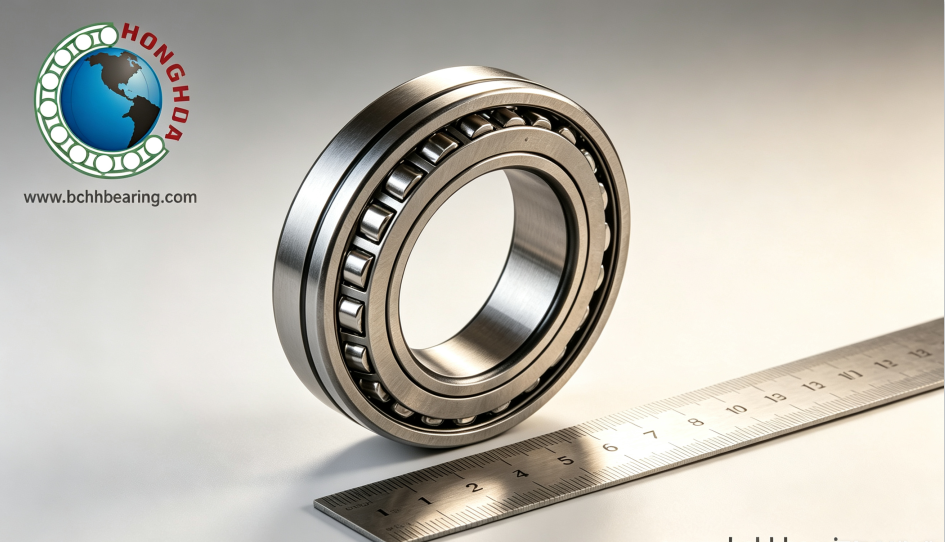
If you maintain fans, crushers, ball mills, or any heavy-duty industrial equipment, you know the drill: choose the wrong spherical roller bearing or install it improperly, and you're asking for trouble. Premature vibration, raceway flaking, and sudden failure are costly—not just in parts, but in downtime and lost productivity.
This guide cuts through the noise. Whether you're a seasoned maintenance technician or new to the trade, you'll walk away with a clear, actionable process for selecting and replacing spherical roller bearings correctly—the first time, every time.
Many people make the mistake of selecting a bearing based solely on dimensions. That's a recipe for disaster. Spherical roller bearing selection comes down to three critical factors: operating conditions, load characteristics, and environmental factors.
Different equipment imposes vastly different demands. Matching the bearing strength to the application doubles service life. Here's the breakdown:
| Application Type | Typical Equipment | Recommended Bearing |
|---|---|---|
| Light Duty | Fans, conveyors, steady loads | Standard spherical roller bearing (no reinforced suffix) |
| Heavy Duty | Crushers, ball mills, mining equipment, high-impact loads | Reinforced type – look for E, CA, or CC suffixes. These feature thicker rollers and heavier raceways for superior durability |
| High-Temperature / Harsh Conditions | Metallurgical equipment, boiler fans, high heat, dust | Heat-resistant spherical roller bearings with high-temperature grease to prevent thermal degradation |
Pro Tip: For heavy-duty applications, always choose bearings with E, CA, or CC designations. The CA design features a machined brass cage and inner ring locating ribs, while CC bearings have two stamped steel cages and a floating guide ring. The E design features an optimized internal geometry for increased load capacity.
Choosing the wrong clearance is one of the most common—and costly—mistakes. Remember: heavy loads and high temperatures demand larger clearances. Here's your quick reference:
| Clearance Code | Description | Best For |
|---|---|---|
| C0 (Normal) | Standard clearance | Light-duty applications, steady loads, normal temperatures |
| C3 (Increased) | Larger than C0 | Heavy loads, moderate impact (fans, standard crushers) – the go-to for most heavy equipment |
| C4 (Even Larger) | Larger than C3 | Extreme impact, high temperatures, shaft deflection (ball mills, mining crushers) – accommodates thermal expansion and prevents seizure |
Critical Warning: Never select C1 or C2 (reduced clearance) for heavy-duty or high-temperature applications. Heat causes expansion, and insufficient clearance will lead to bearing seizure and catastrophic failure.
The operating environment directly impacts bearing life. Dust, moisture, and contaminants are the enemies of any spherical roller bearing.
Cage Selection:
Standard conditions: Brass cage – cost-effective, smooth operation
High-impact / heavy shock loads: Welded steel cage – impact-resistant, less prone to fracture (ideal for crushers and ball mills)
Seal Selection:
Dusty / wet environments (mines, construction sites): Choose labyrinth + oil seal双重密封, and add protective covers to block contaminants completely
Clean, ambient-temperature environments (workshop fans): Standard double-sided seals are sufficient
Even the best-selected bearing will fail prematurely if installed incorrectly. Follow these five steps for a flawless replacement.
Power down the equipment, disconnect the power source, and allow the bearing to cool naturally. Never disassemble a hot bearing – this risks burns and component deformation. Clean the bearing housing area thoroughly to prevent contaminants from entering the shaft or housing during replacement.
Use a dedicated puller or sleeve to remove the old bearing. Never use a hammer or chisel – this damages the inner/outer rings and raceways, and can score the shaft.
After removal, thoroughly clean the shaft and housing with solvent. Remove all metal debris, old grease, and contaminants.
Lightly sand the shaft surface with fine sandpaper to remove rust and scratches. Inspect the shaft and housing for deformation or wear – repair before installing a new bearing, or the new bearing will suffer from misalignment and premature failure.
Inspect the new bearing: Verify the model number, clearance (C0, C3, C4), and cage type match your selection. Check raceways and rollers for scratches or damage.
Heat the bearing for installation – this is a critical step. Use an induction heater to heat the bearing evenly to 80–100°C (176–212°F). Never use an open flame – this will anneal the bearing, softening the steel and destroying its load capacity. SKF recommends not exceeding 80°C for sealed bearings.
Wear gloves – never touch raceways or rollers with bare hands. Skin oils and sweat can contaminate the bearing and shorten its life.
Use a dedicated sleeve to press the new bearing evenly onto the shaft. Ensure the inner ring sits flush against the shaft shoulder – no gaps, no tilting.
Check the misalignment angle: Spherical roller bearings are self-aligning, but standard types allow up to 1.5° of misalignment, and reinforced types up to 2°. Use a dial indicator to monitor alignment and prevent偏心 loading.
Lock securely: Tighten the locking nut and install a locking washer to prevent loosening and shaft axial movement during operation.
Apply lubricant: Select the appropriate grease or oil for your application (extreme-pressure lithium grease for heavy loads, synthetic grease for high temperatures). Fill the bearing cavity to 1/2 to 2/3 full – too much causes overheating, too little causes inadequate lubrication.
Trial run: Run the equipment no-load for 10–15 minutes. Monitor vibration (speed ≤ 4.5 mm/s) and temperature (temperature rise ≤ 30°C). Listen for abnormal noise or binding. Once confirmed, proceed to light-load operation.
| Condition | Choose This |
|---|---|
| Light duty, steady load | Standard spherical roller bearing |
| Heavy duty, impact loads | E / CA / CC reinforced design |
| Heavy loads, normal temperatures | C3 clearance |
| Extreme impact, high temperatures | C4 clearance |
| High shock loads | Welded steel cage |
| Dusty / wet environment | Labyrinth + double seal + protective cover |
| Installation | Induction heat to 80–100°C |
Don't select by size alone – always match the bearing to the application. Heavy-duty equipment needs reinforced bearings.
Don't guess on clearance – high-temperature, heavy-load applications require C3 or C4. Small clearances = seizure.
Don't use brute force – hammers and chisels ruin bearings and shafts. Use proper tools.
Don't ignore seals – contaminants destroy bearings fast. Seal properly for your environment.
Don't mix lubricants – heavy loads demand extreme-pressure grease. Standard grease won't protect the raceways.
BCHH (Wuhan Honghao Machinery Co., Ltd) has been manufacturing and exporting high-quality bearings since 2005. With ISO 9001 certification, over 20 years of experience, and products exported to 30+ countries including Italy, Germany, the UK, the USA, and Brazil, BCHH delivers reliability you can count on.
Our spherical roller bearings are engineered to handle heavy radial loads and moderate axial loads while accommodating shaft misalignment. Featuring:
Two rows of symmetrical rollers for high load capacity
Spherical outer ring raceway for self-aligning performance
Precision-made from high-grade bearing steel with advanced heat treatment
Applications: Mining, construction equipment, industrial gearboxes, paper machinery, wind turbine gearboxes, marine propulsion, and pump systems
Spherical roller bearing selection is about matching the bearing to your application, load, and environment. Spherical roller bearing replacement is about cleanliness, proper heating, and precise alignment. Get these right, and your bearings will deliver maximum service life with minimum downtime.
For technical support or to request samples, contact BCHH today at sales@wuhanbearing.com.
"To make the best quality in most competitive price",is our principle and "To support our clients enlarge their local market in max" is our continuous target
 Fast Shipping & Global Delivery
 100% Guaranteed Quality
 Safe Transaction
 Free Samples, Request